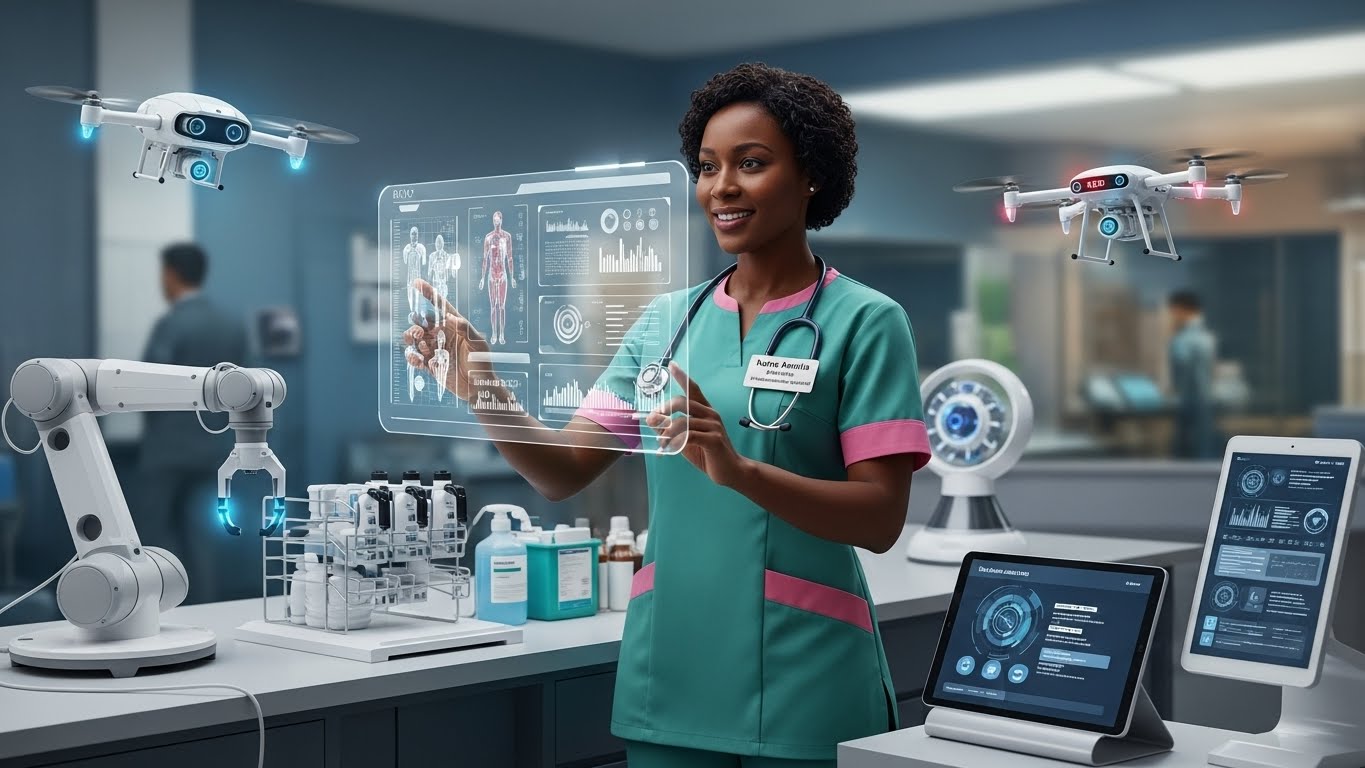
Every time I talk about AI with nurses, someone eventually whispers the question:
“Be honest… is this going to replace us?”
I understand the fear. We’ve watched charting systems, new scanners, and smart pumps roll in with big promises—and still end up staying late. So let’s talk honestly about where AI fits in nursing.
AI is good at patterns. Nurses are good at people.
AI can scan huge amounts of information quickly. It can suggest wording, flag trends, and summarize data.
But it cannot:
- Notice the “something’s off” look in a patient’s eyes
- Hear the fear in a family member’s voice
- Advocate in a family meeting
- Hold a hand during bad news
Those things live in the heart of nursing, and AI doesn’t have a heart.
What AI can realistically replace
AI can replace:
- Re-typing the same education for the 100th time
- Staring at a blank screen trying to phrase your note
- Manually sorting through long protocols to find the section you need
- Spending 30 minutes creating a handoff sheet
If we allow it, AI can be the “junior assistant” that handles repetitive digital work so we can focus on care.
Why nurses are actually more needed in an AI world
As AI grows, we become the humans who:
- Decide when it’s appropriate to use it
- Catch errors or unsafe suggestions
- Advocate for patient privacy and dignity
- Bring compassion into fast, tech-heavy systems
If AI is the engine, nurses are the conductors who decide where the train is going.
How to stay relevant (and powerful) in the AI era
- Learn the basics – enough to know what AI can and cannot do.
- Practice with low-risk tasks – notes, schedules, education drafts.
- Keep building your human skills – communication, advocacy, critical thinking.
- Be the bridge – the nurse who can explain AI to others with warmth and clarity.
Conclusion
No, AI is not here to replace nurses. It’s here to change the kind of work we do.
If we ignore it, we risk being left out of decisions that affect our patients and our profession.
If we learn it, we can shape how it’s used—and protect the heart of nursing in the process.